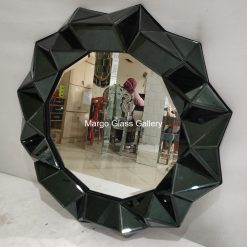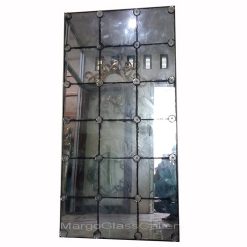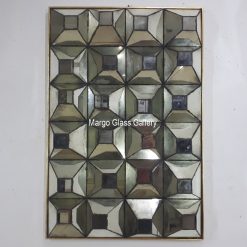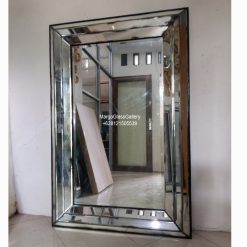
A Venetian Mirror has become one of the most iconic film props for shaping Mood, Drama & Period Setting in cinematic storytelling, because it is far more than a decorative object it is a visual language that strengthens the emotional weight of a scene. In the world of filmmaking, a movie’s impact is never defined solely by acting, dialogue, or plot. Visuals carry emotional power of their own, and props often serve as the subtle yet crucial building blocks behind a film’s artistic identity.
Among all these props, the Aesthetic Venetian Mirror consistently stands out, especially in movies centered on royal courts, classical romance, and fantasy. Why is that? Because a mirror does more than reflect a character it reflects the mood, the era, and the emotional context of the entire scene.
Ornamented pieces like a Decorative Venetian Mirror introduce levels of drama that modern minimalist props simply cannot replicate. In many period films, the presence of a Venetian Mirror becomes a visual anchor that immediately enhances the historical setting. So, what exactly makes this mirror so cinematic?
Rooted in the rich glassmaking traditions of Murano, the Italian Venetian Mirror carries centuries of artistry. Its layered panels, hand-carved decorative motifs, and elegant symmetry make it one of the most recognizable symbols of aristocratic visual culture.
In period films, these qualities are invaluable. A single Venetian Mirror can instantly transform a set into a believable aristocratic chamber, a royal dressing room, or a noblewoman’s private quarters. Its historical aura feels authentic, and authenticity is one of the strongest tools in period storytelling.
Is there any other prop that can communicate “nobility,” “class,” and “old-world refinement” as effectively as a Venetian Mirror?
Venetian Mirrors have an inherent ability to communicate time. Their carved frames, beveled edges, and ornate detailing naturally tie them to classical and royal aesthetics.
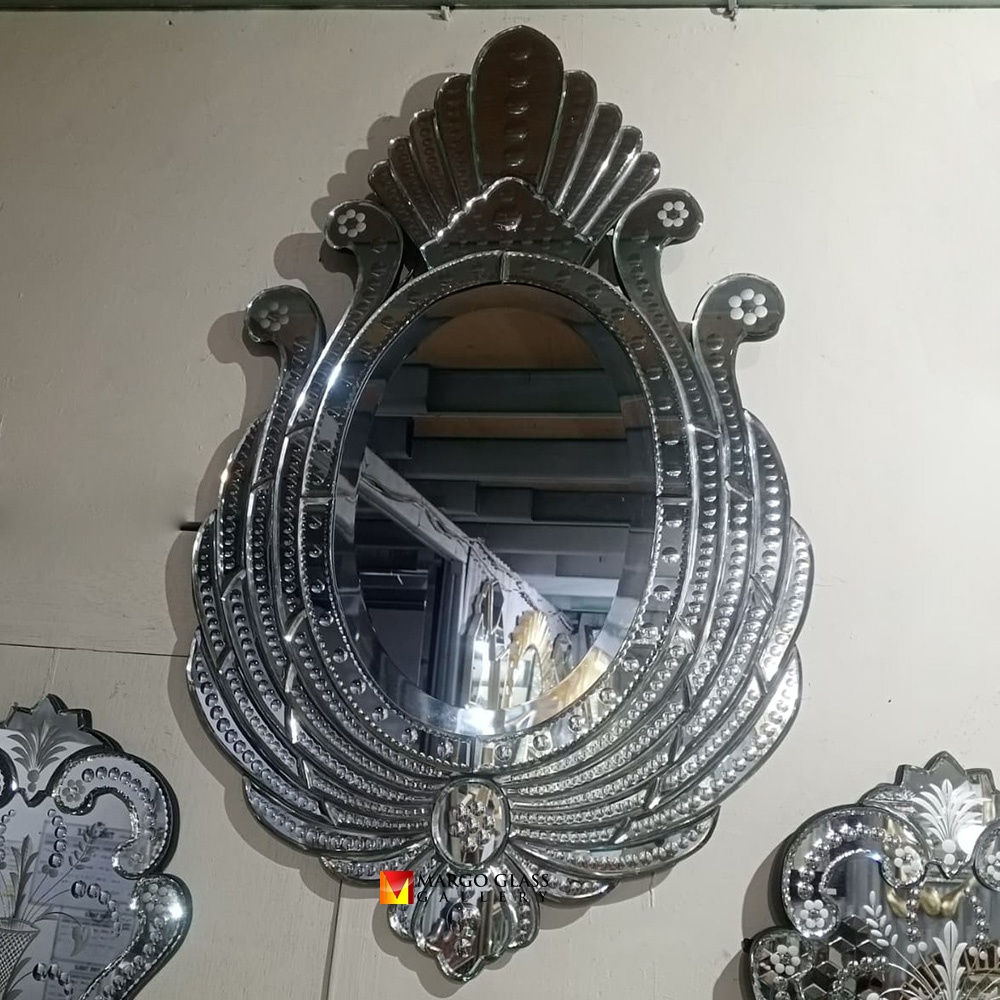
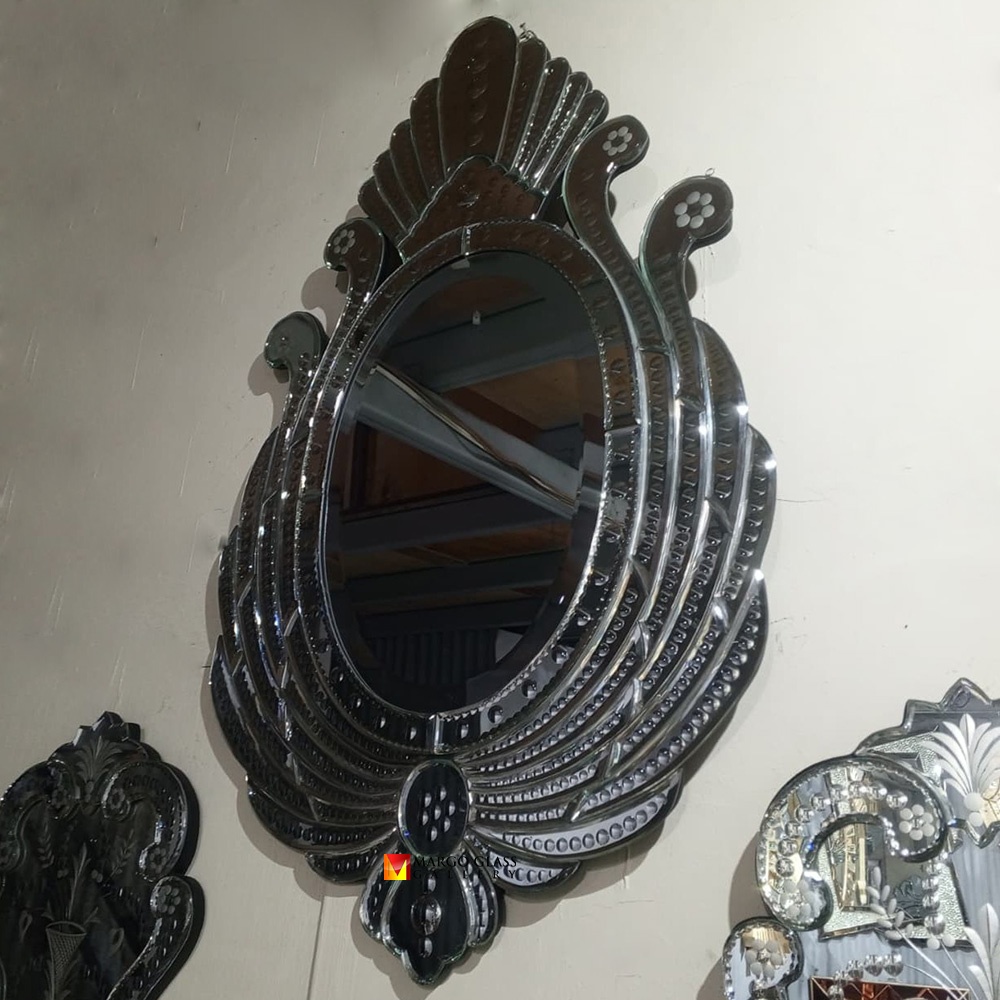
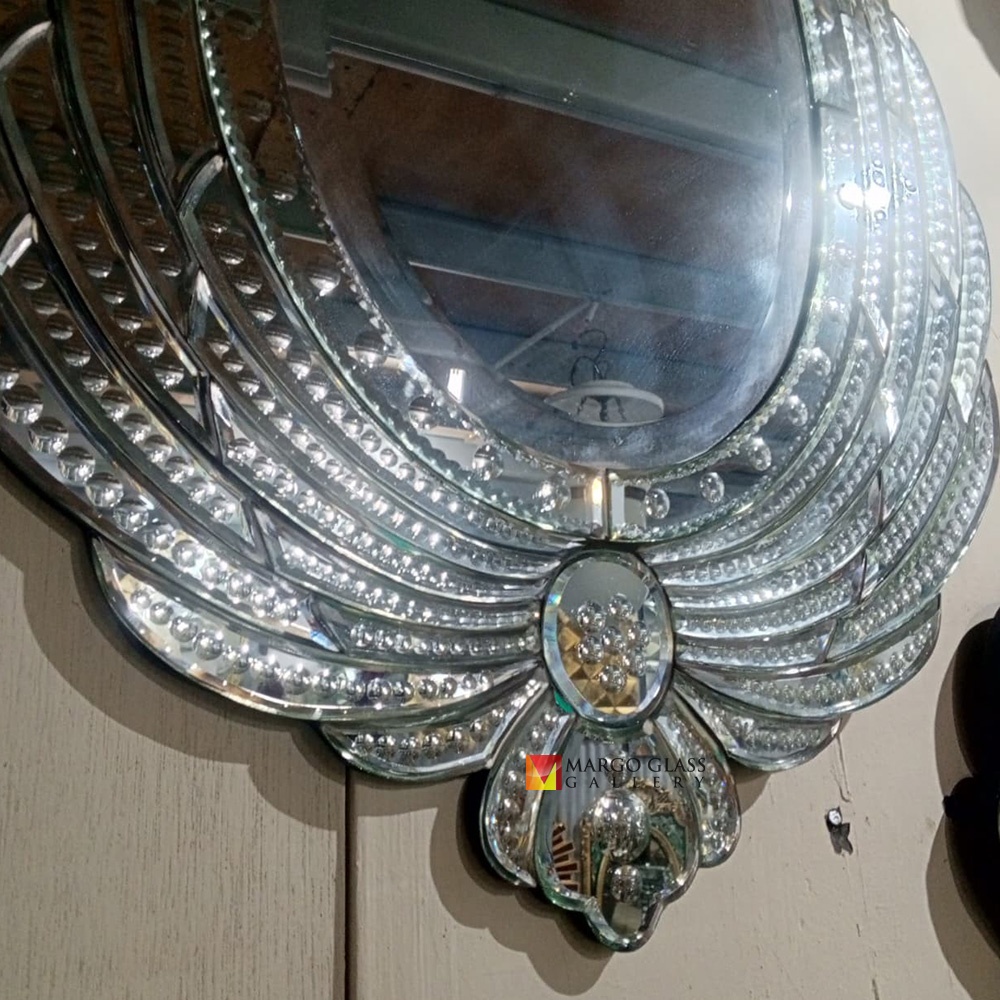
The mirror referenced here, for instance, is a stunning 90 × 56 cm oval Venetian design crafted with precision. The shape is vertical and elongated, crowned with an upper crest and framed by soft floral curves on the left and right. Its inside carvings are created from within the glass making the surface smooth, refined, and highly cinematic.
The mirror uses 5 mm silver glass, features rippled inner beveling, and includes a 1 cm beveled edge along the outer perimeter to break light beautifully while ensuring safety on set. Supported by an 18 mm black-finished plywood backing, it is sturdy enough for multiple shooting locations.
Placed within a film set, this mirror immediately signals elegance, era specificity, and social status three visual clues that every period drama depends on.
Why do directors love mirrors for dramatic scenes? Because a mirror is a narrative device. It creates duality, introspection, and emotional layering.
Imagine a scene where a queen, overwhelmed with doubt, gazes at her reflection. The camera captures her through the mirror not directly. What does the audience see?
Not only her expression, but also the surrounding atmosphere: soft highlights bouncing from bevelled edges, delicate ornamentation framing her face, and the subtle glow dancing across carved floral details.
The Aesthetic Venetian Mirror enhances emotional storytelling, creating a moment that feels poetic, tense, or melancholic depending on how the scene is lit.
While Venetian Mirrors are most prominent in historical dramas, their use extends across multiple genres:
This is why terms like Venetian Mirror India often appear in film production conversations, especially in industries that celebrate intricate set dressing.
Picture this: A royal princess enters her private chamber. Candles flicker softly. She pauses in front of an oval Venetian Mirror. The camera shifts, revealing her reflection framed perfectly by the carved crest and floral motifs. The rippled bevel subtly scatters light, giving her reflection a dreamlike glow.
In this moment, the mirror does not merely serve as background decoration it becomes part of the emotional narrative. It frames the character, enhances symbolism, and adds atmospheric texture. Isn’t it remarkable how a single mirror can change the entire cinematic tone?
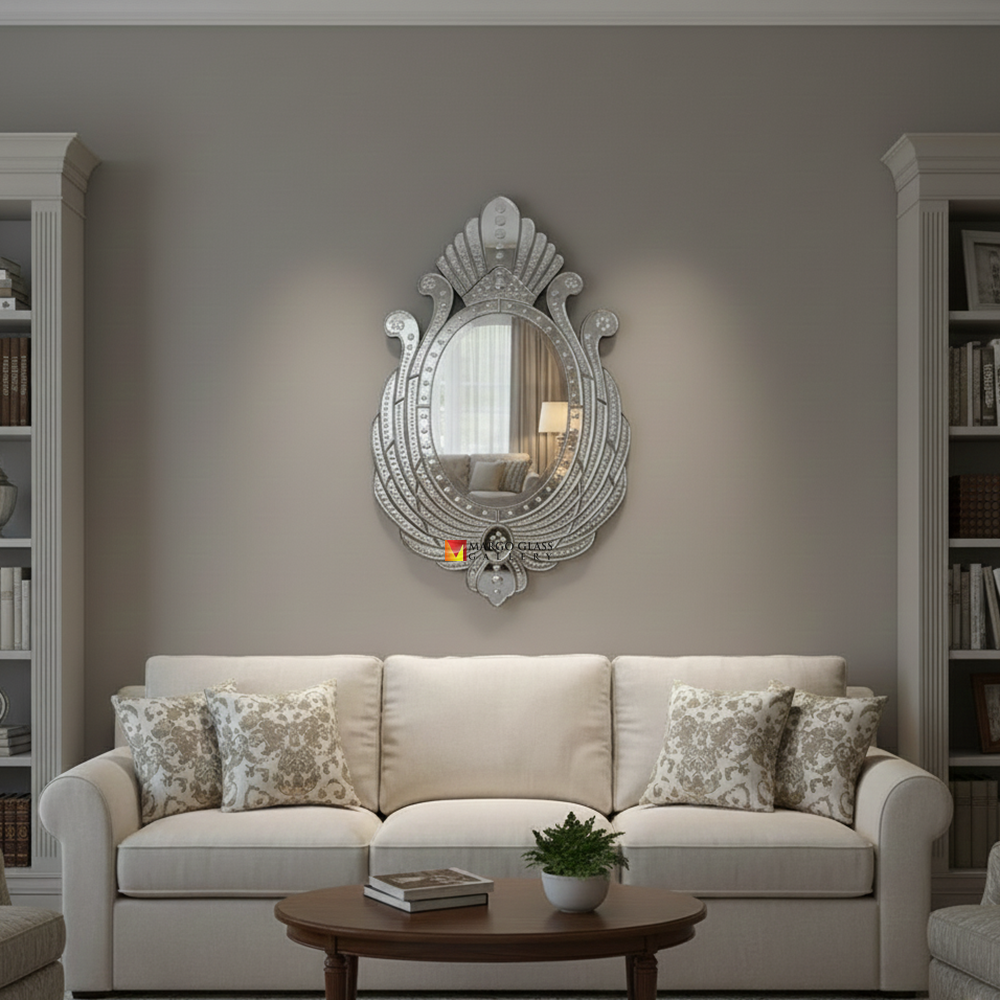
The mirror described carries exceptional artistic craftsmanship:
These qualities make it not only visually appealing but highly functional for cinematography. Its reflections, textures, and highlights help directors and DOPs shape the visual rhythm of a scene.
Venetian Mirrors remain industry favorites because they are:
In an era where visual storytelling must be stronger than ever, such iconic props remain irreplaceable.
A Venetian Mirror is far more than a decorative object it is a storytelling instrument. It enhances mood, deepens drama, reinforces period accuracy, and enriches cinematic imagery.
If you are an art director, set decorator, or filmmaker searching for a prop that carries both emotional and visual power, a Venetian Mirror is one of the most effective choices you can make.
For film production needs, interior sets, or custom orders, feel free to contact us we are a trusted Venetian Mirror Supplier dedicated to providing high-quality pieces for professional creative projects.
By : Wulan
We are a leading manufacturer and wholesaler of Venetian mirrors in Indonesia. With our commitment to elegant design, superior quality, and competitive prices, we cater to individuals, wholesalers, and even large-scale projects such as hotels.
Whether you need advice on designs or sizes, feel free to consult with us. Let us be your reliable source for exquisite Venetian mirrors.