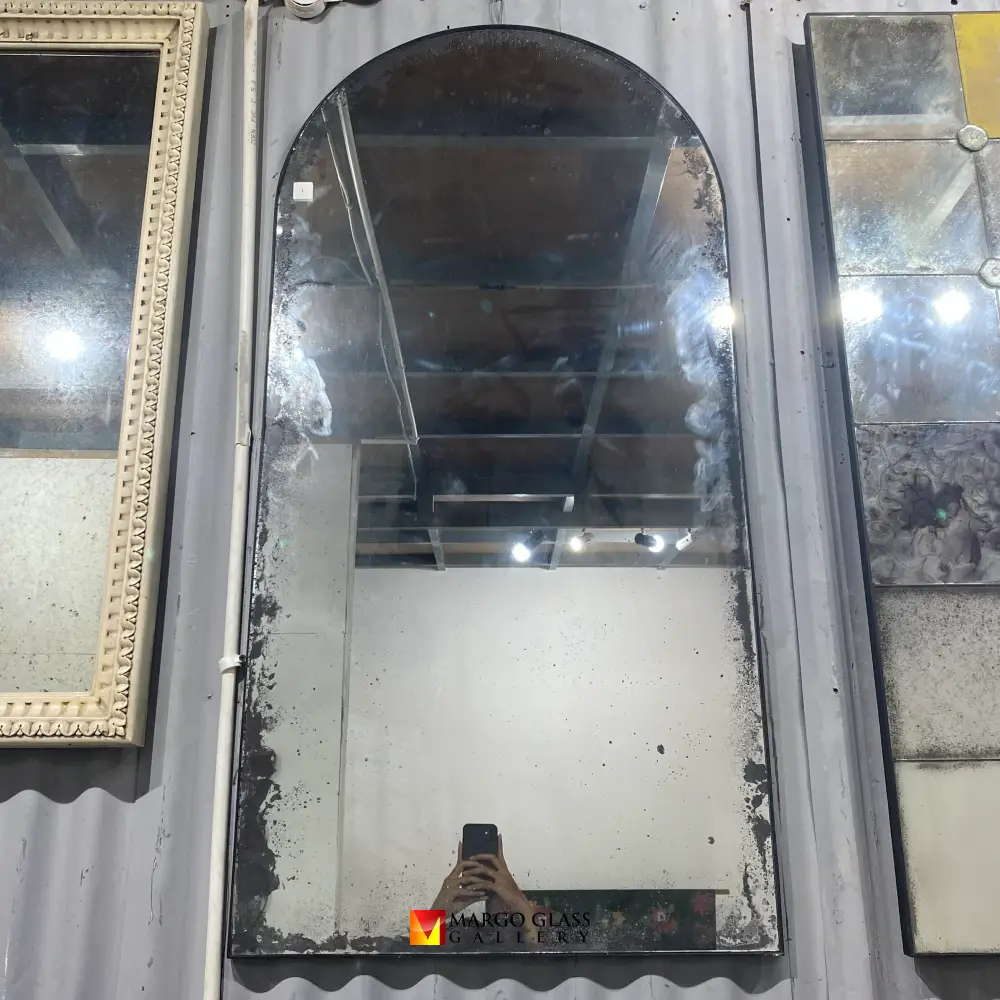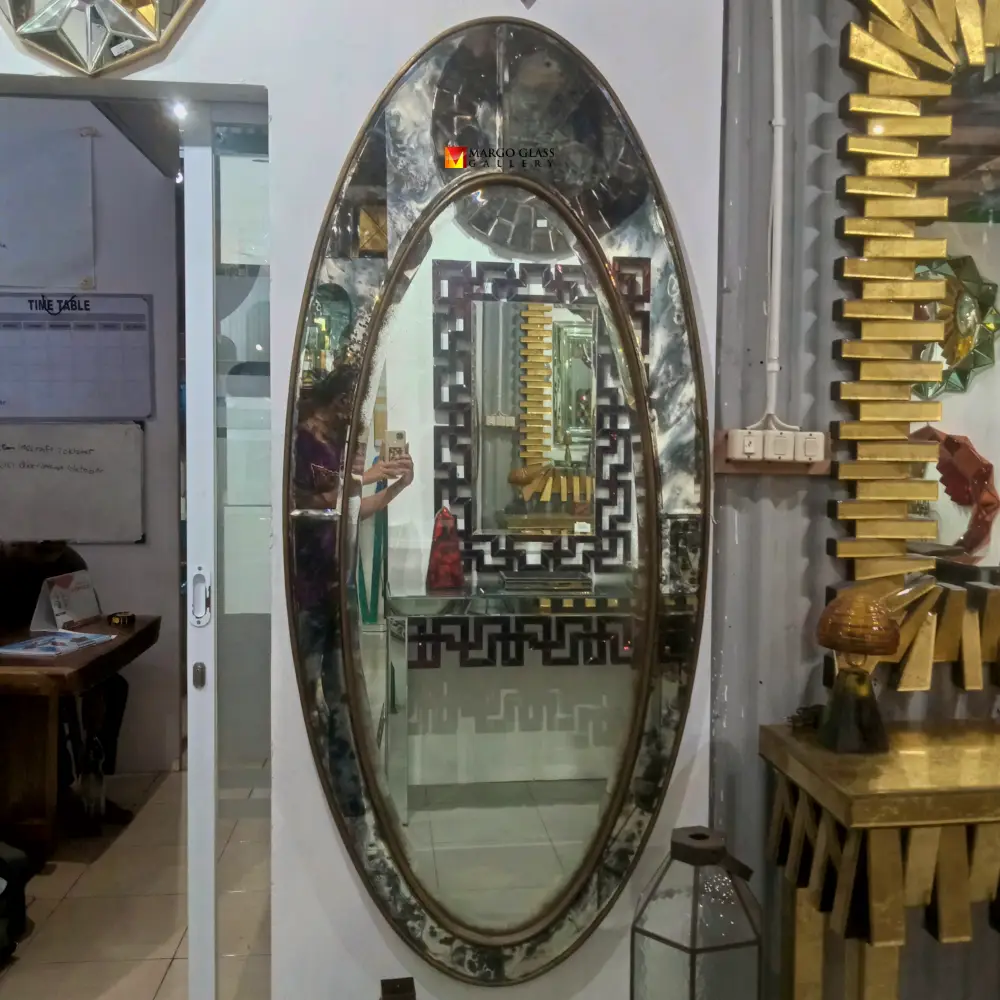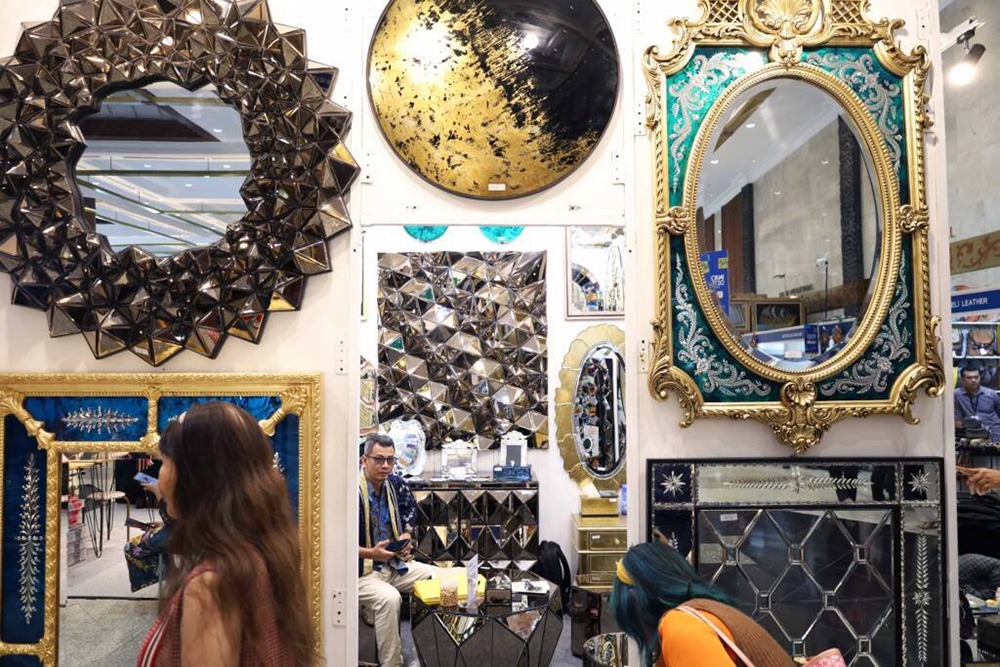
Mirrors are not merely used for looking at one’s reflection; they also serve as an Decorative Mirror. In the hands of Sri Margo Waluyo, owner of Margo Glass Gallery, this material is transformed into various interior elements, ranging from Decorative Mirrors and furniture to wall panels, ceilings, and beds.
As an Indonesian Glass Manufacturer, Margo Glass Gallery demonstrates how glass can become a versatile material for creating distinctive interior products.
Margo presented this concept at INACRAFT October 2026, held at the Jakarta International Convention Center (JICC), Jakarta, from October 7–11, 2026. She showcased interior products made from mirrors that combine design, handcrafted workmanship, and the exploration of decorative effects. These products demonstrate how Glass Interior Design can combine practical functions with decorative details.
Glass Engraving And Decorative Finishing Techniques for Decorative Mirrors
Unlike glass products sold in sheets or cut pieces, Margo Glass Gallery transforms the material into value-added Decorative Mirros. The patterns are designed in-house and then shaped through several stages, including cutting and engraving using a grinding stone.
“One of the special features of our products is that the glass is engraved,” Sri Margo said when interviewed at INACRAFT October 2026.
Producing these Decorative Mirror requires precision and a division of labor. The entire process cannot be handled by one person from beginning to end. Each worker is responsible for a specific stage to ensure that production proceeds continuously. In a week, her team can produce approximately 10 items, depending on the complexity of the work.
In addition to engraving, Margo Glass Gallery has developed coloring techniques to create effects resembling natural stone, available in green, red, blue, and other colors. These effects are achieved through a finishing process that produces a natural appearance rather than through spraying techniques. The finishing techniques also provide different visual possibilities for each Decorative Mirror Design.
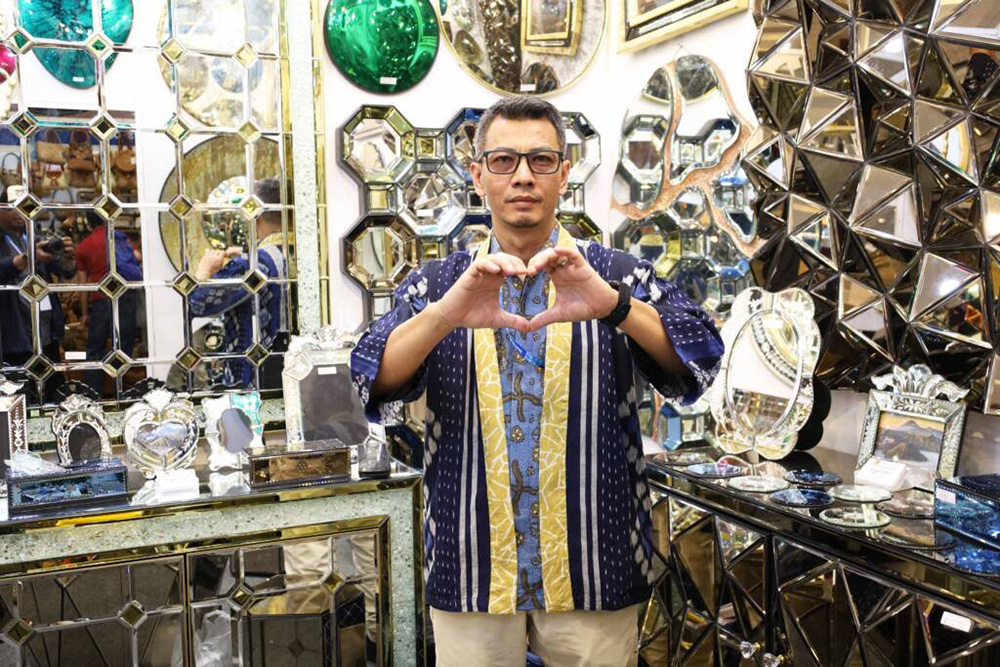
Custom Glass Products And Furniture Design
Almost any element requirement can be developed using glass. The products include tables, cabinets, chairs, stools, and beds. These Custom Glass Products can be developed from designs created by her team or based on customer requests. The variety of Glass Furniture reflects the company’s approach to using glass as a material for functional furniture and decorative interior pieces. If a proposed design cannot be produced using glass, she offers technical alternatives to the customer.
“The principle is that whatever customers need in relation to glass as a material, we should work on it,” she explained.
This approach has also shaped the market for Margo Glass Gallery. Approximately 80 percent of its market comes from exports, particularly to Europe and the United States. According to Sri Margo, domestic consumers tend to prefer clear mirror surfaces, while buyers in export markets are more interested in classic-style products with a natural character, making these Decorative Mirrors distinctive.
The company also accepts custom orders for interior design projects, creating each Decorative Mirror to meet specific requirements. Sri Margo does not set a minimum order quantity. Orders of any size are accommodated, with prices adjusted according to the design requirements, type of workmanship, and the customer’s budget.
“Our concept is to provide customers with solutions for using glass as a decorative mirror element in their homes, with budgets adjusted to their financial capabilities,” Sri Margo said.
From Local Craftsmanship To International Markets For Decorative Mirrors
Sri Margo started her own business in 2010, after entering the glass industry when she moved to Solo in 1998. From the beginning, she built her market through websites, even before social media became widely used as a marketing tool. Today, the company manages two websites with different target markets: margovenetianmirror.com for export markets and margoglassgallery.com for the domestic market.
The export website primarily targets interior designers and project clients, so product prices are not displayed directly. Meanwhile, the Margo Glass Gallery website is more focused on the local market.
Digital marketing strategies have helped the company reach buyers across different countries. However, export businesses also face challenges, including rising logistics costs and longer shipping times.
According to her, ideal shipping costs should be below 10 percent of the production price. In practice, Sri Margo generally handles shipments up to the port, while customers arrange and bear the costs of subsequent shipping.
Expanding The Role Of Glass In Interior Design
Meanwhile, Sri Margo is preparing for business succession by developing employees who have mastered production skills. Some senior employees have even established businesses of their own.
Through its products, Margo Glass Gallery seeks to broaden the way people perceive glass. Rather than treating it merely as a complementary interior material, the company uses glass as a primary material for creating furniture and decorative pieces, with designs that can be customized to meet customers’ needs. This approach highlights the versatility of glass in both Glass Interior Design and functional furniture applications.
Source : Inacraft News
Original Author : Eddy Purwanto