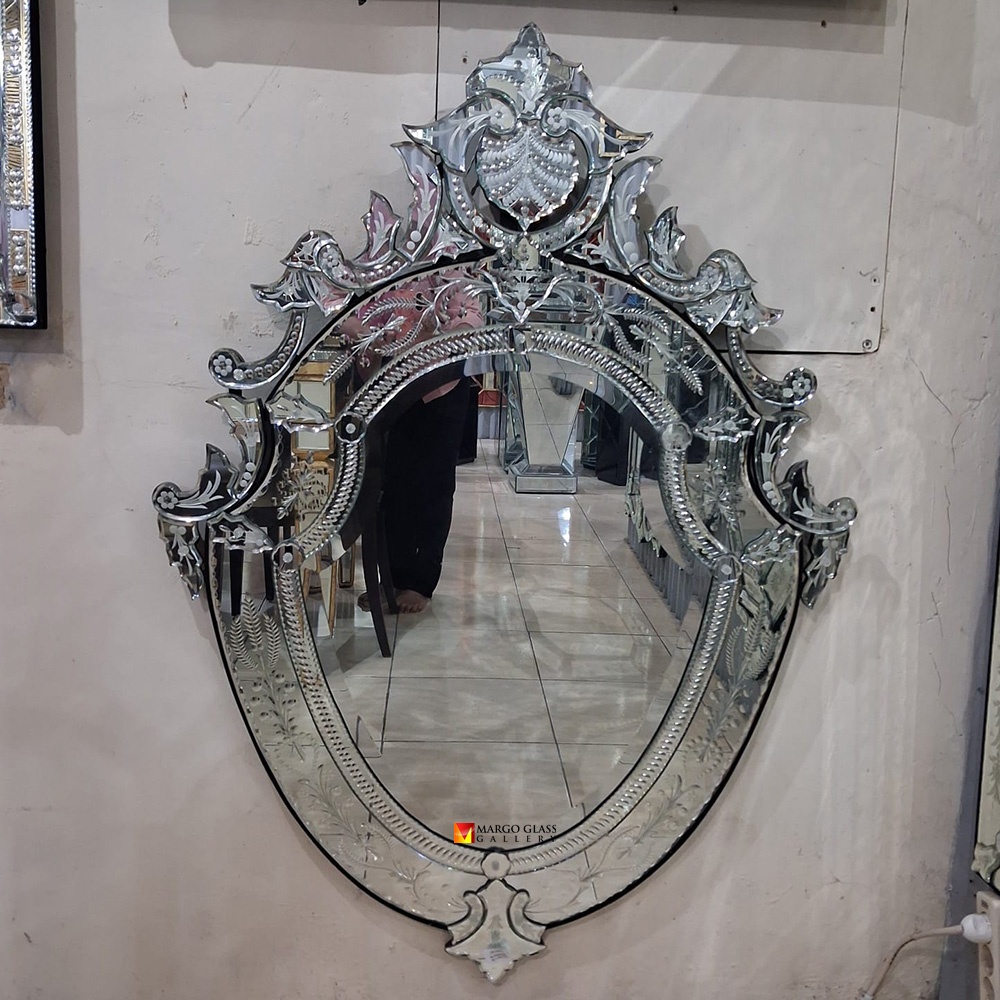
Carved Venetian Mirror in the theme Mirror and Ego: Between Self-Appreciation and Narcissism invites us to ask: how often do we look in the mirror and what for, really? In this context, the question becomes more than just a daily routine. This theme encourages us to see that a mirror is not merely a visual tool, but also a medium for psychological reflection.
When we stand in front of a mirror, are we taking care of ourselves, or are we seeking validation? This simple activity turns out to hold a much deeper meaning about personality, self-perception, and our relationship with the outside world.
Since ancient times, humans have used mirrors to understand themselves physically. In a modern context, a Silver Venetian Mirror is not only a functional object but also an aesthetic element that enriches a space. But when does this need turn into excessive behavior? Does looking in the mirror frequently always mean we care about ourselves, or could it signal a dependency on appearance?
A Carved Venetian Mirror becomes a thin line between necessity and obsession. When the frequency of looking in the mirror increases not out of need, but from the urge to ensure “perfection,” a deeper question arises: are we seeing ourselves, or just an ideal image we are trying to achieve?
In today’s world, self-love is often associated with self-acceptance. But when we stand in front of an Azzurra Venetian Mirror, are we truly accepting ourselves as we are? Or are we searching for flaws that need to be corrected?
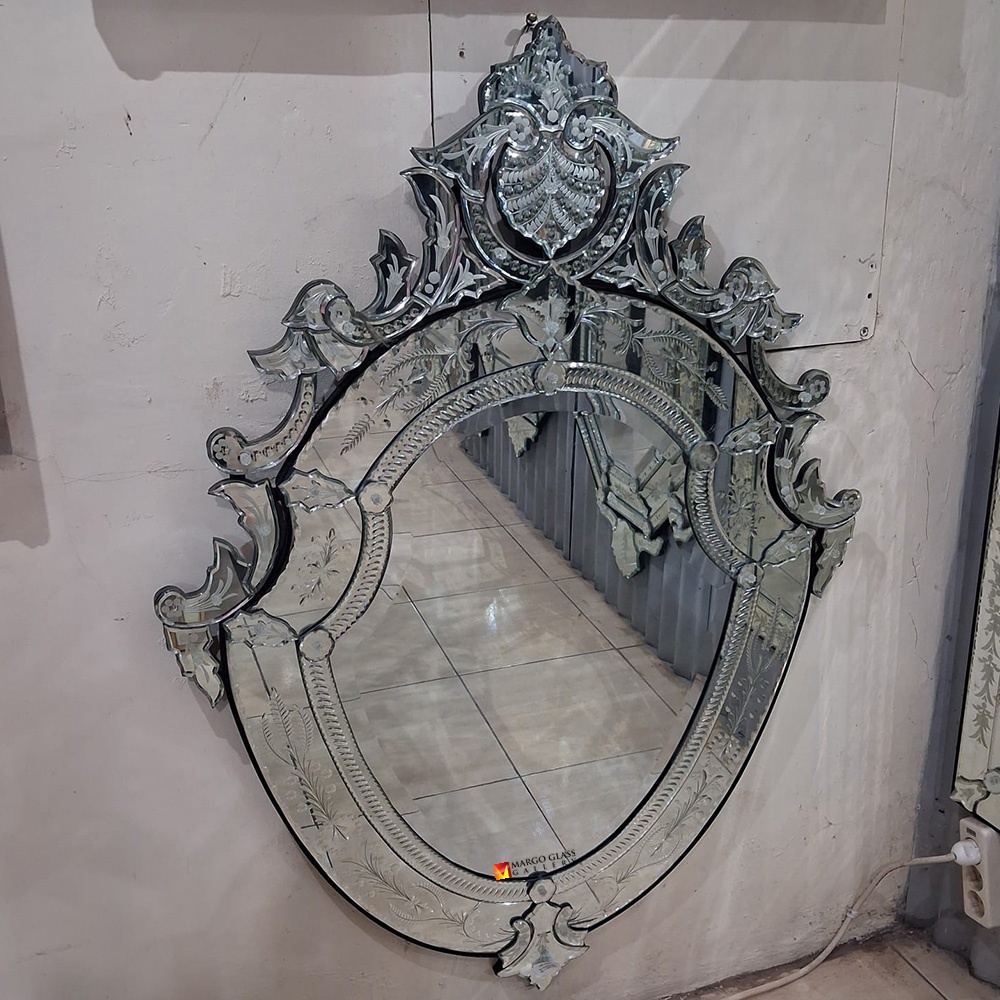
Healthy self-love means being able to look at our reflection without excessive anxiety. We appreciate what is there, rather than constantly comparing ourselves to external standards. In this sense, the Carved Venetian Mirror becomes a tool for self-understanding, not judgment. But if reflection triggers a sense of inadequacy, then the function of the mirror has shifted from reflection to pressure.
Confidence and narcissism may appear similar, but they are fundamentally different. In the perspective of Mirror And Ego Psychology, confidence comes from internal acceptance, while narcissism depends on external validation.
A confident person can look in the mirror without feeling the need to prove anything. On the other hand, narcissism arises when the mirror becomes a tool to reinforce the ego as if reflection defines self-worth. The question is: do we feel enough after looking in the mirror, or do we feel the need to keep checking ourselves from every angle?
This is where awareness becomes essential: are we using the mirror to understand ourselves, or to construct an image for others to see?
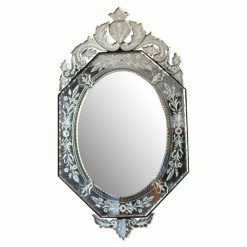
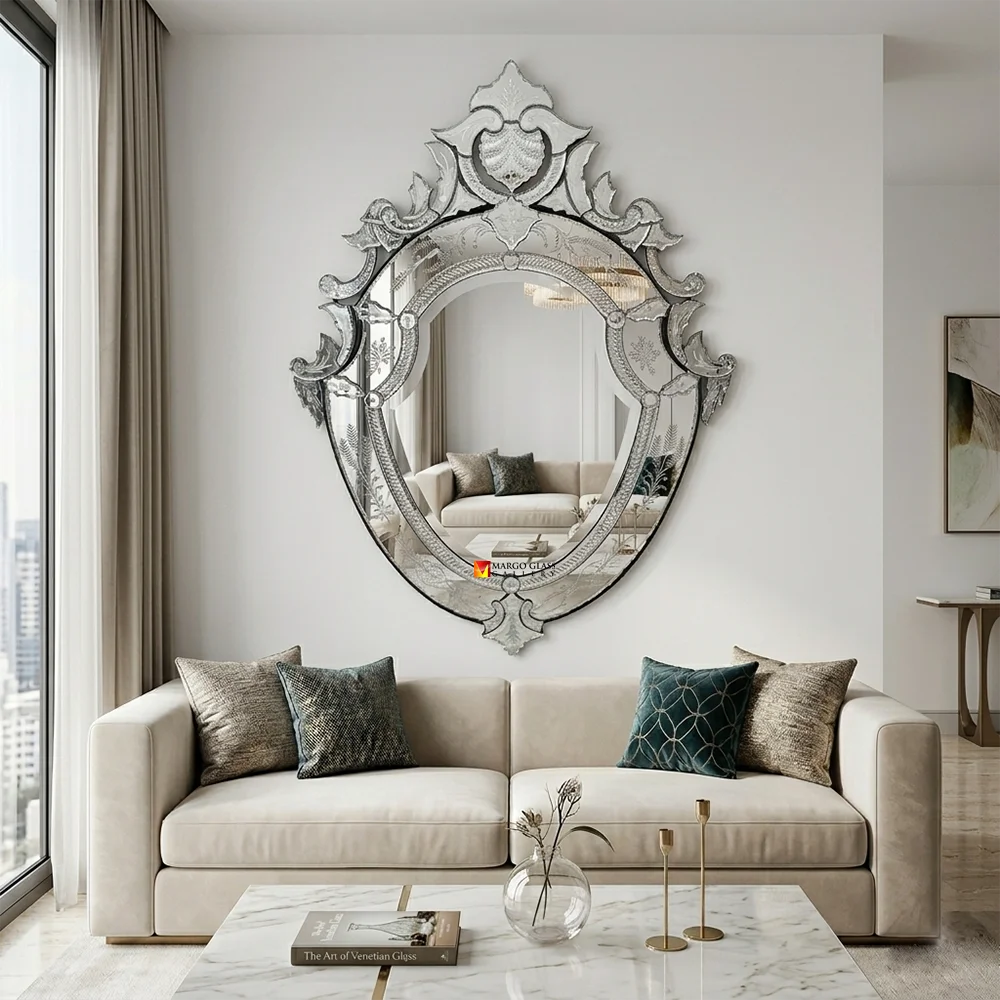
The difference between self-appreciation and narcissism is often subtle. A Vertical Venetian Mirror with an elegant oval shape and tall proportions, for example, offers a complete reflection experience. But how we respond to that reflection is what defines its meaning.
Self-appreciation is marked by a sense of calm and sufficiency after seeing oneself. There is no constant urge to fix or compare. In contrast, narcissism often comes with the need to appear perfect and to gain recognition.
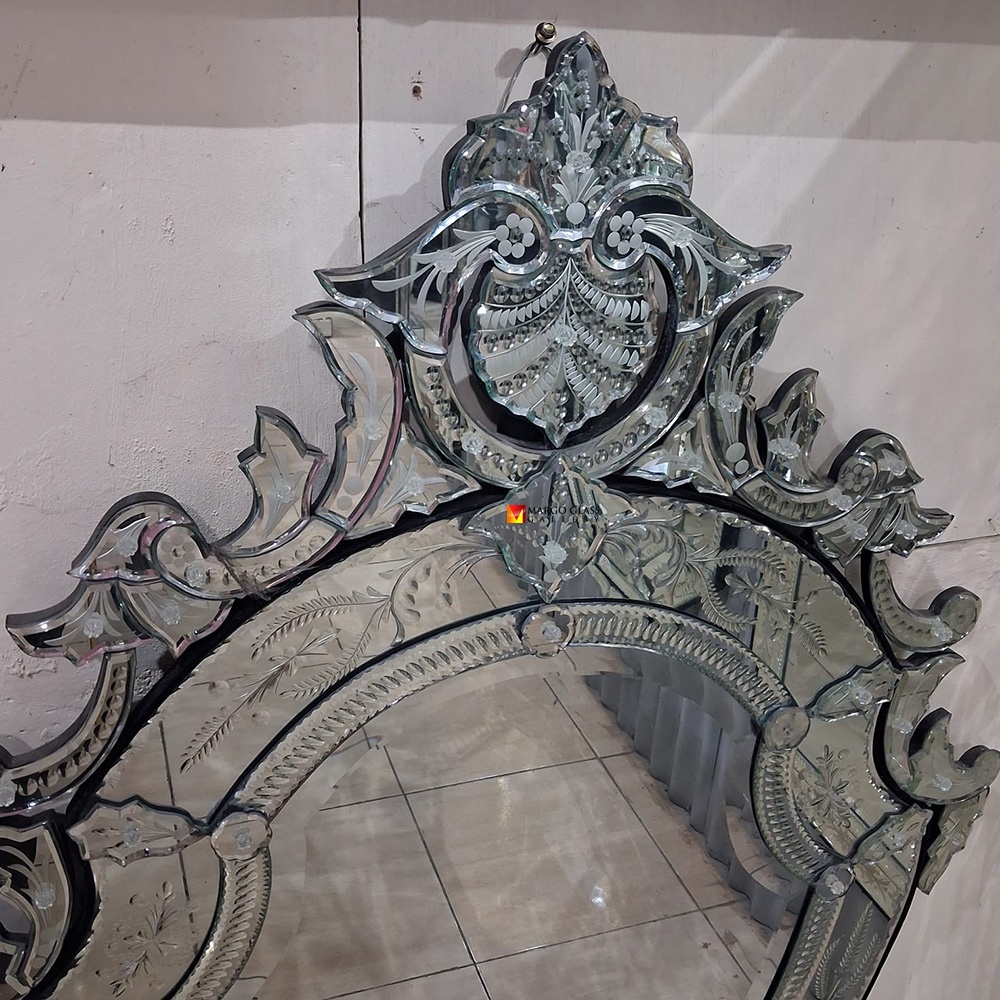
Psychologically, we never truly see ourselves as we are. What we see is an interpretation shaped by experience, emotion, and environment. In this case, a mirror with detailed design elements such as floral engravings, scroll motifs, and inner beveled raindrop accents is not just a visual object, but also a psychological stimulus.
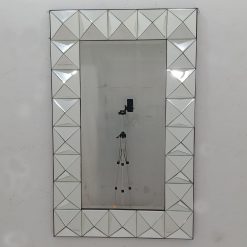
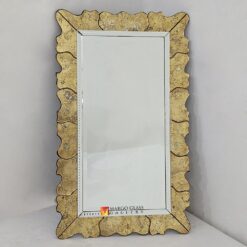
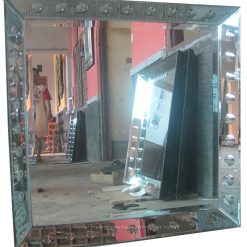
This Carved Venetian Mirror is engraved from the inside, keeping the surface smooth to the touch, and is made using 5mm thick glass that produces a clear yet soft reflection. The inner mirror is enhanced with beveled raindrop accents that catch light in a unique way, while the edges are beveled for safety, ensuring they are not sharp.
The visual environment plays a significant role in shaping self-perception. A mirror with a classical design, measuring 128 cm x 90 cm, with a vertical oval form and a crown ornament at the top, creates a sense of elegance and refinement. Combined with an 18mm plywood backing with a black finish, the structure is both strong and premium in appearance.
Objects like this not only enhance a space but also influence mood and self-perception. A beautiful mirror tends to encourage us to see ourselves in a more positive way. But does that mean we become more confident, or more dependent on visual appearance?
The key lies in awareness. Use the mirror as a tool to understand yourself, not to seek approval. When standing in front of a mirror, try asking:
With this approach, the Carved Venetian Mirror returns to its original function: a tool for reflection, not a source of pressure.
In the end, a mirror is a medium not the destination. A Carved Venetian Mirror with artistic design, smooth internal engraving, elegant silver tones, and refined detailing does more than beautify a space it creates a deeper reflective experience.
As part of its design philosophy, Venetian Mirror Company believes that a mirror should not only reflect an image, but also help you understand yourself in a more honest and balanced way.
So when you choose a mirror, are you simply looking for decoration or a meaningful reflection experience? Discover a mirror that is not only visually beautiful but also emotionally meaningful. It’s time to turn every reflection into a journey of self-understanding, not just a glance at a surface.
By : Wulan
We are a leading manufacturer and wholesaler of Venetian mirrors in Indonesia. With our commitment to elegant design, superior quality, and competitive prices, we cater to individuals, wholesalers, and even large-scale projects such as hotels.
Whether you need advice on designs or sizes, feel free to consult with us. Let us be your reliable source for exquisite Venetian mirrors.