In the evolving landscape of contemporary interior design, Mottled Antique Mirror in the Era of Soft Brutalism emerges as a compelling dialogue between firmness and silence. Brutalism, born in post-war architecture, is known for exposed concrete, honest structure, and an uncompromising sense of hardness. It rejects ornamentation, prioritizes function, and allows materials to speak for themselves.
Over time, however, this approach has shifted. Soft brutalism has emerged an interpretation that preserves structural honesty while introducing warmth through texture, light, and emotional depth.
Soft brutalism is no longer solely about visual strength, but about how a space is felt. Concrete remains present, lines stay firm, yet they are now accompanied by living materials: textured wood, layered plaster, and reflective elements that embrace imperfection. This is where antique mirrors find their relevance.
Why does a Distressed Antique Mirror, marked by age and imperfect reflection, feel so aligned with a design language rooted in structural power? The answer lies in material honesty. Soft brutalism does not seek excessive polish; it values imperfection as part of spatial narrative. Antique mirrors, with their muted patina, make no attempt to conceal time. They exist truthfully much like exposed concrete.
Their slightly blurred reflections create a gentle emotional distance. Space is not mirrored literally, but interpreted, offering a more contemplative visual experience.
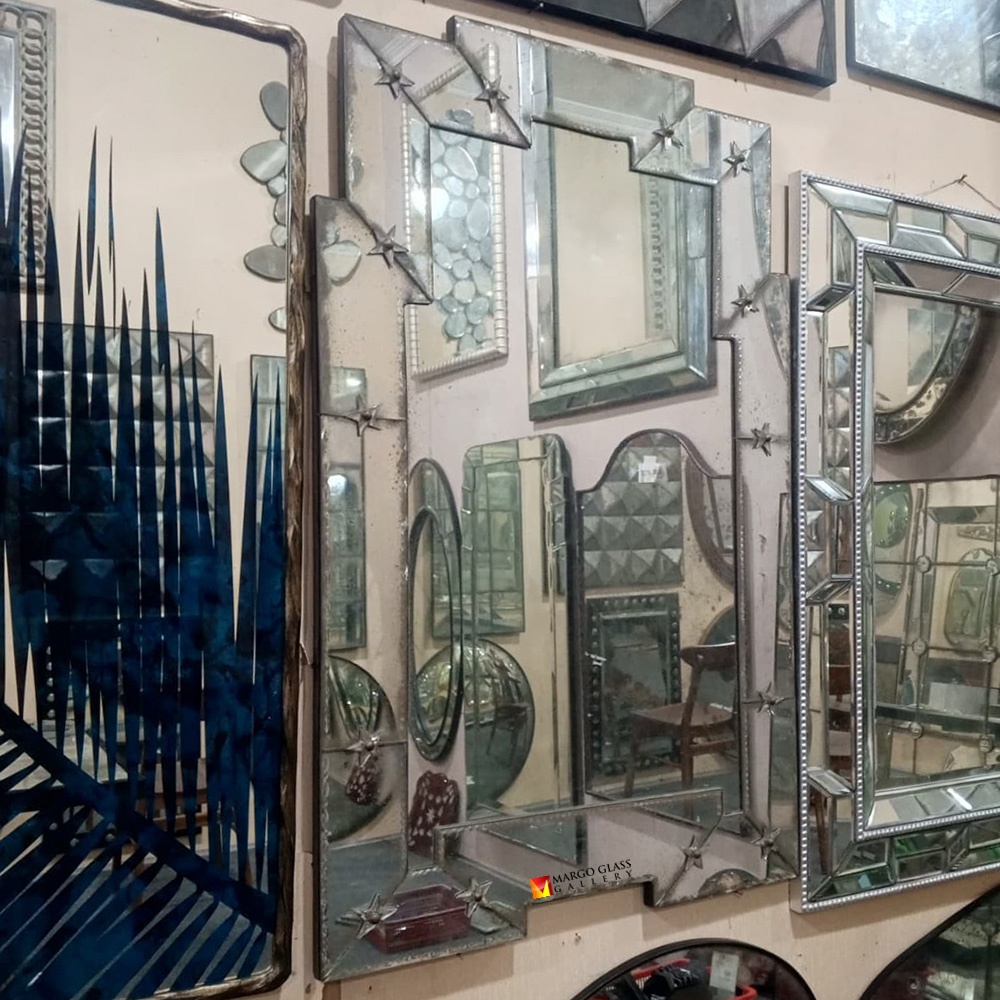
In a design world often obsessed with flawless surfaces, the patina of an Old Antique Mirror becomes a subtle form of resistance. Oxidation speckles, tonal gradations, and delicate stains are not flaws but layers of story. In soft brutalism, finishing is not about covering up it is about allowing process to remain visible.
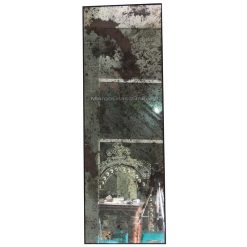
This mirror is crafted from 5 mm thick glass with an antique effect applied in a controlled manner. The result is a reflective surface that is gentle on the eyes, harmonizing with calm and introspective interiors. Shouldn’t a well-designed space invite us to pause, rather than merely perform?
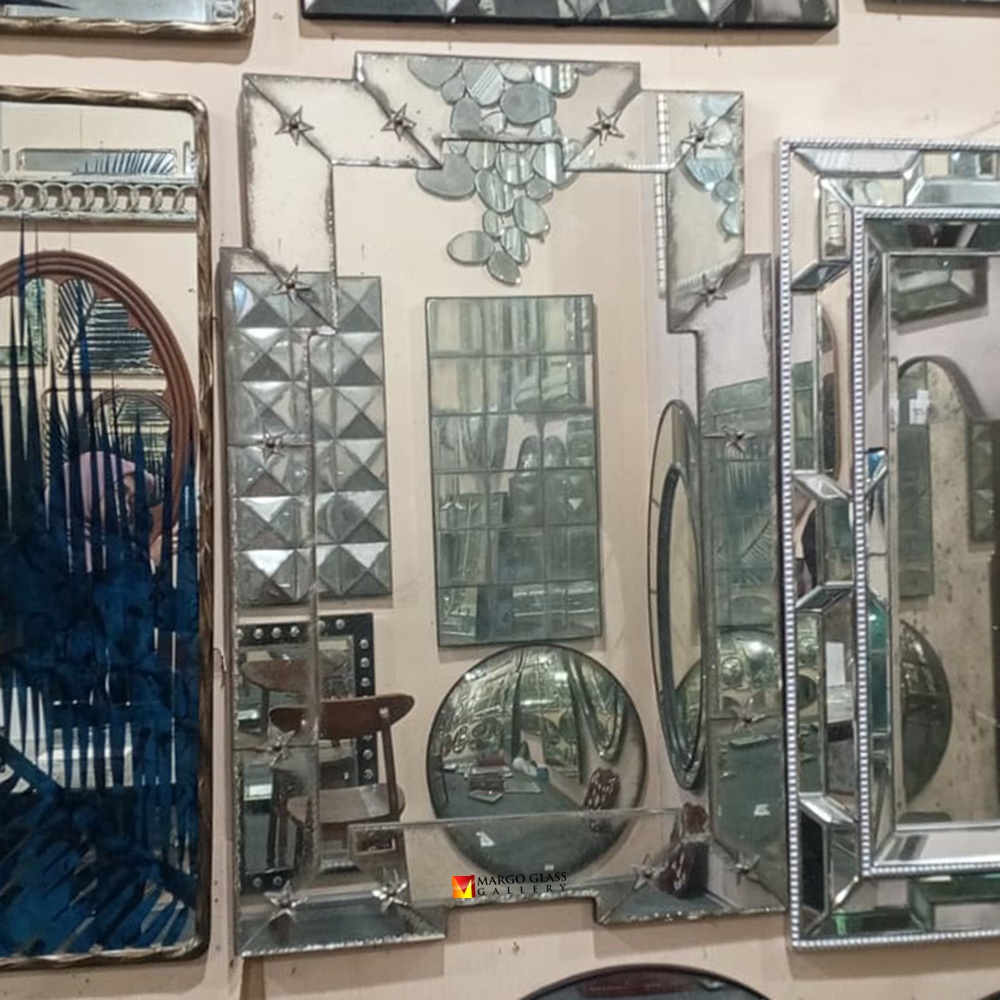
The mirror features a vertically oriented rectangular form measuring 140 x 75 cm, framed by stepped geometric layers that create a strong architectural silhouette. The clean lines and angular transitions recall brutalist façades solid, rational, and unapologetic. Yet, because it is rendered in antique glass, this rigidity never feels cold.
Its generous scale positions it as a Huge Antique Mirror, capable of functioning as a visual anchor. It does not merely hang on the wall; it engages with spatial proportions, scale, and light.
Soft brutalism does not reject detail it chooses details that feel structurally honest. The stud and star motifs embedded within the mirror’s frame are not ornamental embellishments but symbolic connectors. They echo bolts and rivets found in architectural construction, translated into a more poetic visual language.
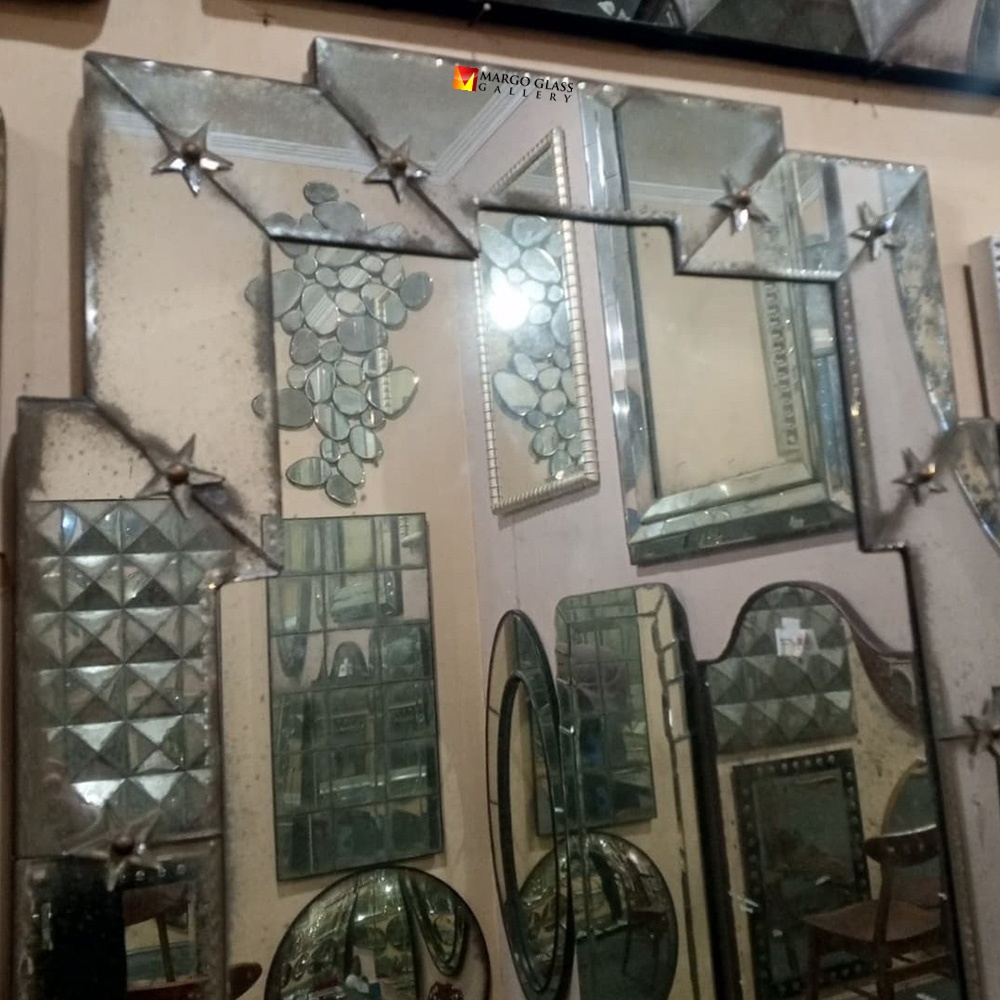
Finished in muted, aged brass tones, these metal accents introduce emotional warmth. They invite reflection: must strength always appear cold, or can it feel warm through thoughtful detail?
Contrast is central to soft brutalist interiors. Concrete walls and textured plaster surfaces require elements that temper their rigidity. This is where the reflective quality of antique mirrors becomes essential. Unlike modern mirrors with sharp clarity, the reflection of a Mottled Antique Mirror often chosen as an Antique Wall Mirror for Soft Brutalist Interior softens spatial perception, diffusing the severity of hard surfaces.
The reflection does not dominate it integrates. It captures natural light, shadow, and human movement, returning them layered with emotion.
Backed with 18 mm black-finished plywood, the mirror offers both structural solidity and visual depth. Functionally, it acts as a stabilizing anchor within interiors dominated by heavy materials. Emotionally, it creates a pause a reflective surface that invites dialogue between space and its inhabitant.
Can a space feel powerful yet intimate at the same time? Soft brutalism answers yes, and antique mirrors serve as one of its most expressive tools.
This mirror is ideally placed against exposed concrete walls, textured lime plaster, or calm monochromatic surfaces where material honesty is allowed to remain visible. Its muted reflection softens the rawness of these finishes, creating a subtle dialogue between hardness and restraint rather than visual competition.
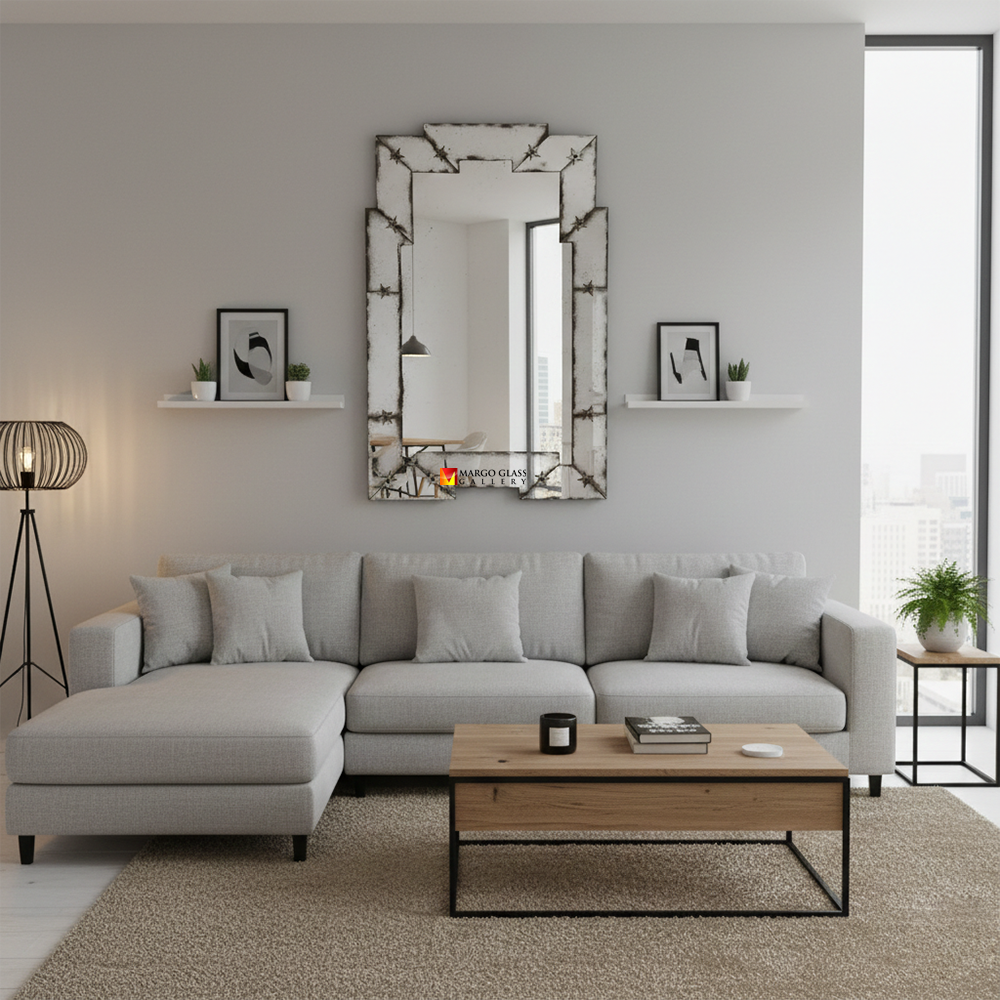
In living areas, the mirror deepens spatial perspective by reflecting light and movement without overpowering the room. In corridors, it expands spatial experience and reduces visual rigidity. In bedrooms, its softened surface offers a more personal, non-judgmental reflection less about appearance, more about atmosphere.
Ultimately, soft brutalism is not merely a visual trend but an emotional approach to space. It acknowledges that human life exists between strength and vulnerability, structure and softness. The design language does not demand perfection; instead, it embraces material presence and emotional depth.
A Distressed Antique Mirror, with all its imperfections, becomes a quiet symbol of that balance. It reflects not only the room, but the intention behind it reminding us that a meaningful interior is not defined by style alone, but by how honestly it allows us to feel within it.
When structural firmness meets reflective silence, a space of character and meaning emerges. As an Antique Mirror Supplier, we believe mirrors are not simply decorative objects, but mediums that shape atmosphere, emotion, and spatial identity. Are you ready to introduce a more honest, human reflection into your interior?
By : Wulan
We are a leading manufacturer and wholesaler of Venetian mirrors in Indonesia. With our commitment to elegant design, superior quality, and competitive prices, we cater to individuals, wholesalers, and even large-scale projects such as hotels.
Whether you need advice on designs or sizes, feel free to consult with us. Let us be your reliable source for exquisite Venetian mirrors.