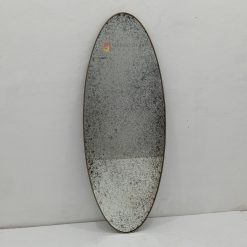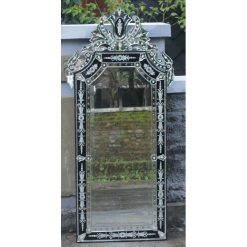
Antique Mirror Tiles stand as one of the colonial traces in the visual culture of the Nusantara, recording a transitional period when two worldviews met and negotiated form. The visual history of the archipelago was shaped not only by local traditions or colonial power alone, but by a complex phase of transition a meeting ground between European visual rationality and indigenous spatial wisdom.
The colonial era, when read more clearly, was not merely a period of oppression or aesthetic imitation, but a transitional space that gave birth to a new visual language. It was within this phase that objects such as antique mirrors emerged as silent witnesses to this encounter.
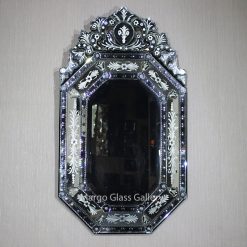
How can a Rectangular Antique Mirror carry narratives of Western visual discipline while remaining sensitive to the tropical spatial context? An antique mirror never simply reflects faces or light. It holds ways of thinking, structures of perception, and traces of cultural adaptation. In Indisch houses, colonial lodges, and heritage buildings, mirrors become visual artifacts silent yet deeply expressive recording a dialogue between two worlds without the need for verbal explanation.
Within the colonial context, mirrors were never chosen merely for decoration. They represented European modernity: order, symmetry, and visual control over space. Unlike local decorative arts that leaned toward symbolism and narrative, the Classic Antique Mirror introduced a rational approach expanding space, regulating light, and asserting geometric clarity within interiors often associated with colonial heritage interior settings.
Antique mirrors functioned as visual artifacts rather than accessories. Their placement was deliberate and strategic, reflecting colonial perspectives on the body, space, and social hierarchy. Does this not suggest that from the very beginning, mirrors were cultural instruments rather than decorative afterthoughts?
Indisch architecture became the primary stage for the meeting of two value systems. European symmetrical floor plans merged with wide verandas, generous openings, and high ceilings designed to respond to the tropical climate. Within these spaces, the Antique Mirror Large appeared not as a dominant visual element, but as a mediator.
Large mirrors reflected natural light, extended visual circulation, and softened shadows. While they retained European visual discipline, their function adapted to local rhythms of life. Is such a mirror still purely European, or has it become an intrinsic part of Nusantara spatial culture?
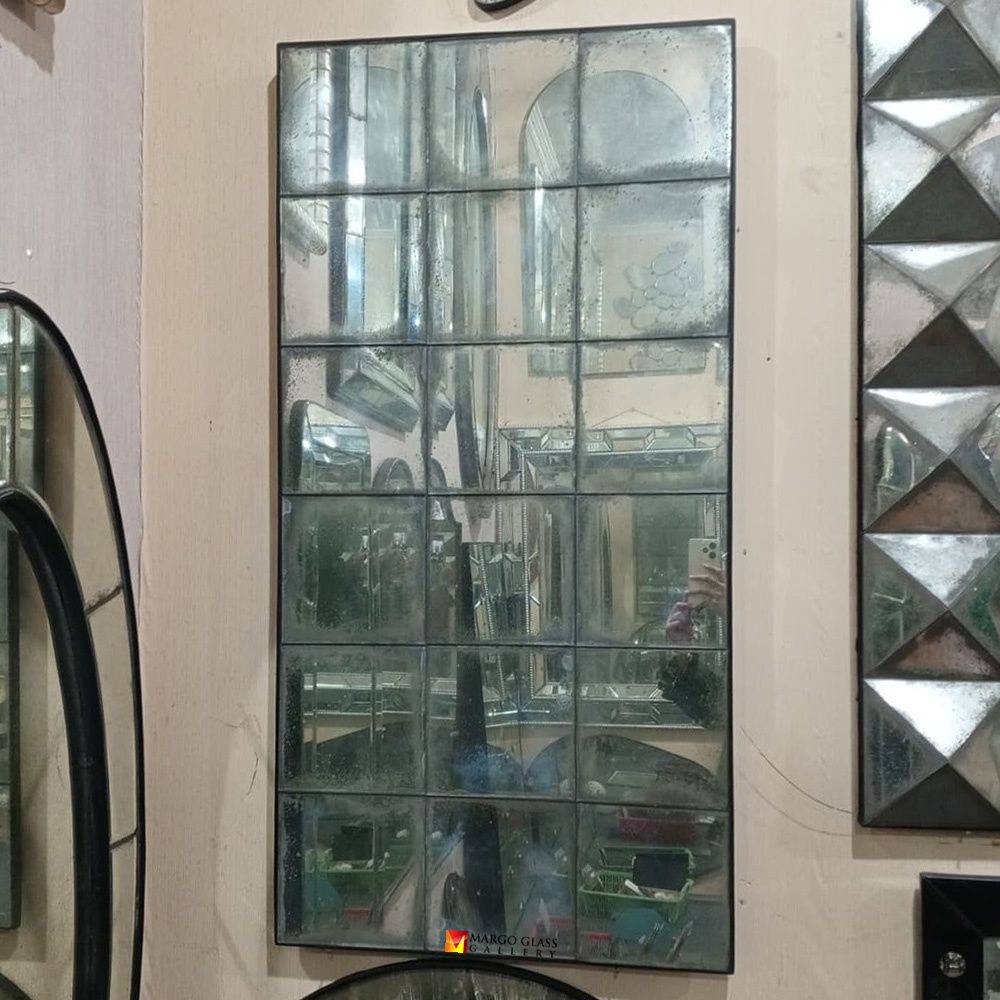
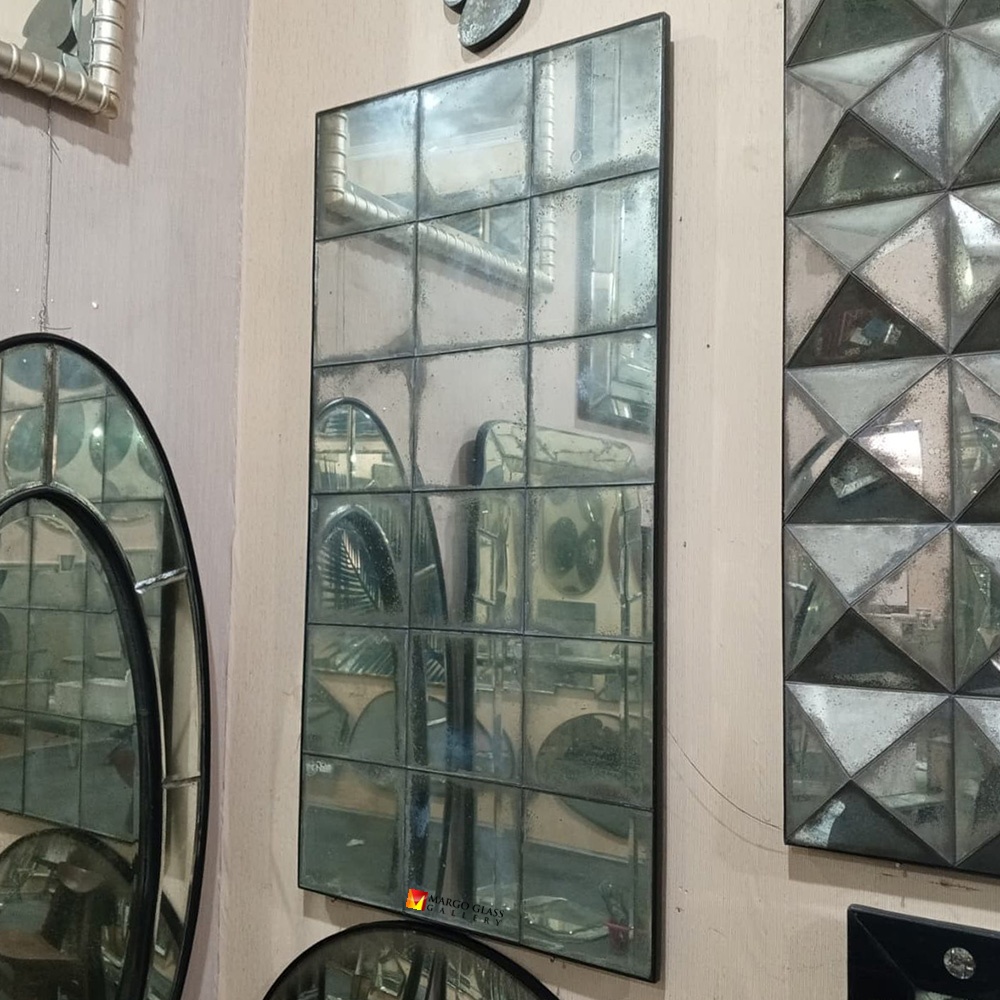
The modular arrangement of Antique Mirror Tiles each panel measuring 30×30 cm and forming an overall reflective surface of 180×90 cm embodies the principles of grid and symmetry. This composition is not merely aesthetic, but a manifestation of colonial thought: measured, repetitive, and systematic.
Yet when this grid inhabits tropical interiors rich in texture and fluidity, it does not feel rigid. Instead, it produces a subtle visual tension between order and imperfection. Is it not this tension that gives colonial aesthetics their enduring and distinctive character?
Over time, colonial objects gradually lost their hegemonic symbolism and became integrated into everyday life. Antique mirrors were no longer read as markers of authority, but as living elements within domestic space.
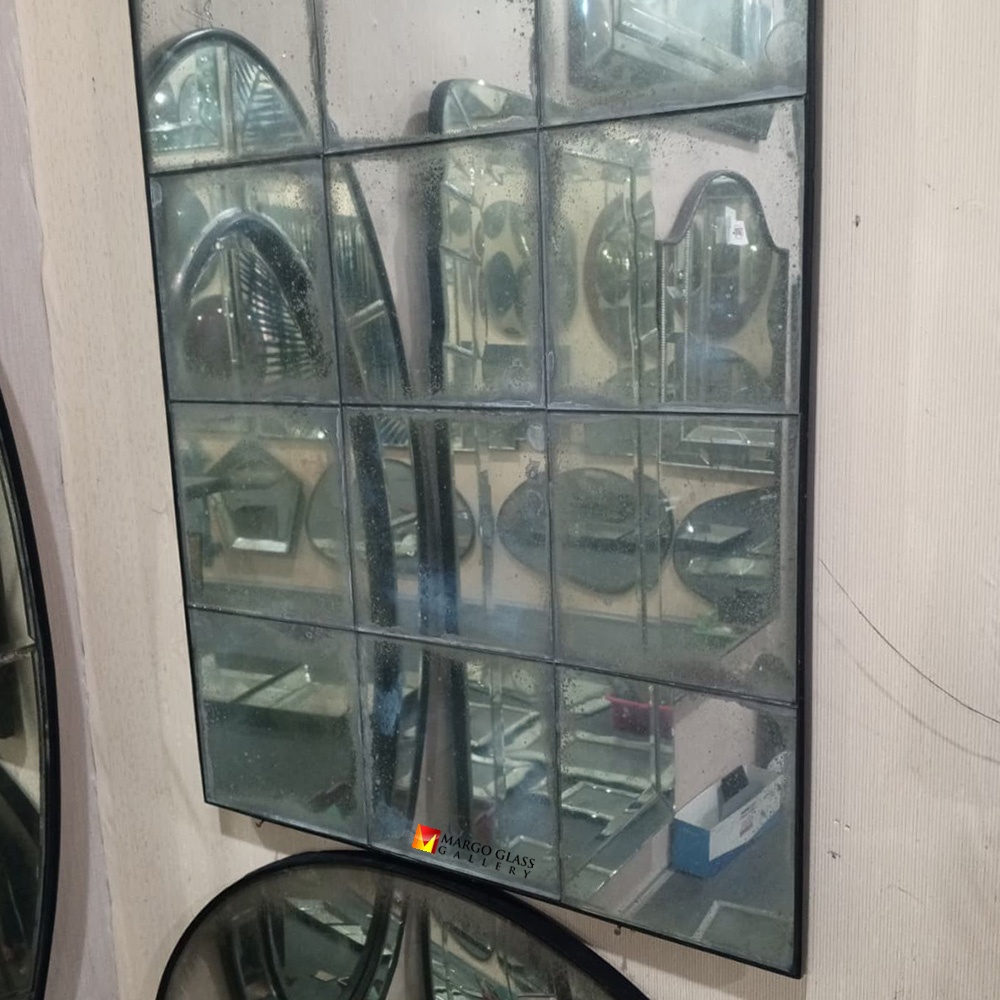
Their soft, clouded, imperfect reflections allow the Rectangular Antique Mirror to feel grounded and humane. Rather than forcing grandeur, it allows space to breathe. Here, local adaptation unfolds quietly without declaration, without resistance, yet profoundly transformative.
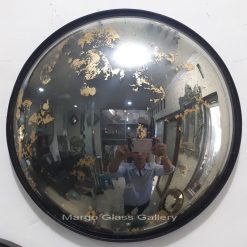
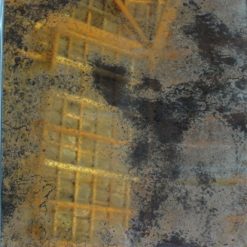
The antique effect on the mirror’s surface smoky silver tones, layered stains, and uneven textures is not a flaw. It is patina: a record of age and temporal passage. On mirrors crafted from 5 mm thick antique glass, this patina becomes a visual archive of history.
The resulting reflection is contemplative rather than sharp, reminding us that history is never fully transparent. Could it be that blurred reflections allow us to engage more honestly with the past?
In heritage buildings, antique mirrors often outlast other furnishings. Supported by an 18 mm plywood backing with black finish, their construction is solid yet understated. As an Antique Mirror Large, the mirror integrates naturally with tall walls, long corridors, and spaces layered with memory.
Rather than competing with architecture, it deepens atmosphere. This is why antique mirrors remain relevant in the restoration of colonial lodges and heritage residences today.
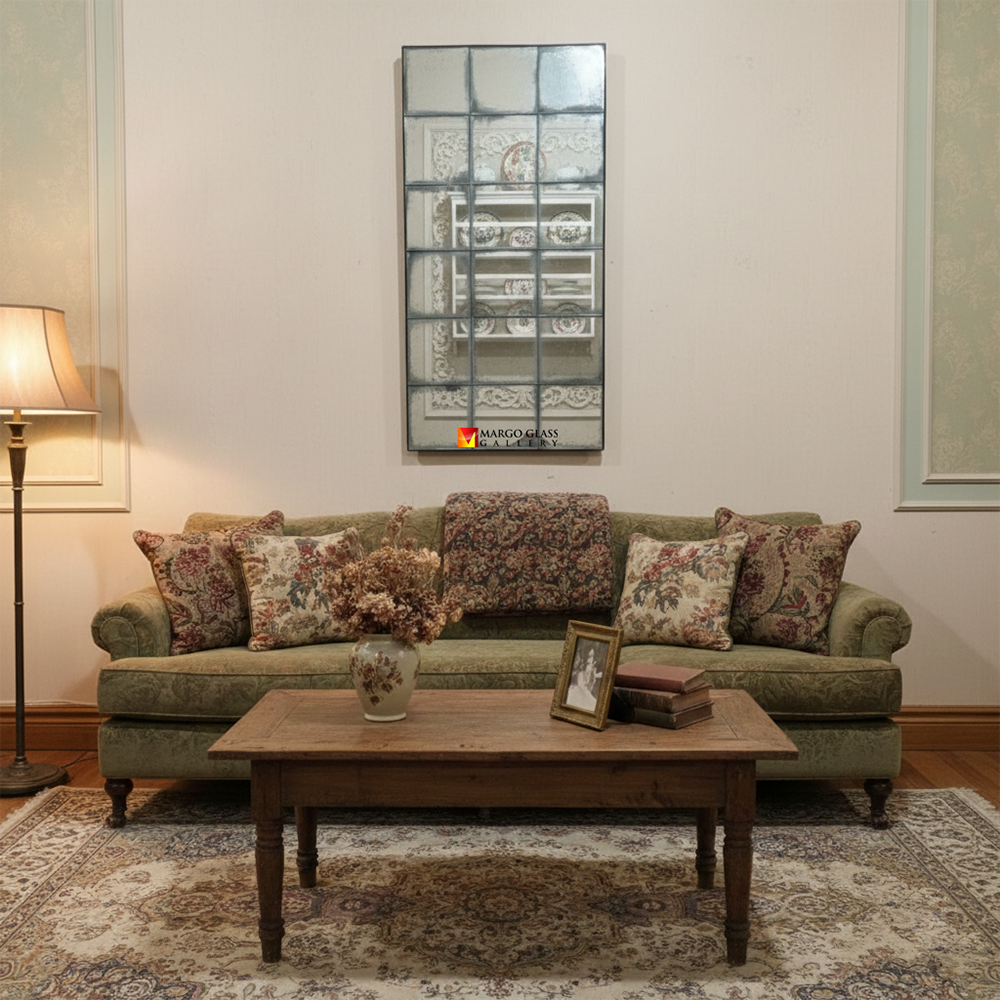
Revisiting colonial heritage is not about romanticizing the past, but about developing a more nuanced understanding of it. Through antique mirrors, we are invited to reflect literally and symbolically on how history has shaped our perception of space and identity.
Aligned with the philosophy of an Antique Mirror Company, today’s antique mirrors are conceived as conscious interpretations honoring material integrity, craftsmanship, and the narratives embedded within each surface.
Antique mirrors are spaces of cultural memory. They hold reflections of the past, processes of adaptation, and dialogues that are never truly concluded. In Indisch houses, heritage buildings, and contemplative contemporary interiors, these mirrors function as connectors across time.
Are we ready to see mirrors not merely as objects, but as cultural mediums? Together with an Antique Mirror Company, each mirror is created not only to reflect space, but to preserve the visual memory of the Nusantara quiet, layered, and deeply meaningful.
By : Wulan
We are a leading manufacturer and wholesaler of Venetian mirrors in Indonesia. With our commitment to elegant design, superior quality, and competitive prices, we cater to individuals, wholesalers, and even large-scale projects such as hotels.
Whether you need advice on designs or sizes, feel free to consult with us. Let us be your reliable source for exquisite Venetian mirrors.